- +91 9041090167 |
- +91 9041090198
- hilberthealthcare@gmail.com
- Mon - Sat 10.00 A.M - 6.00 P.M

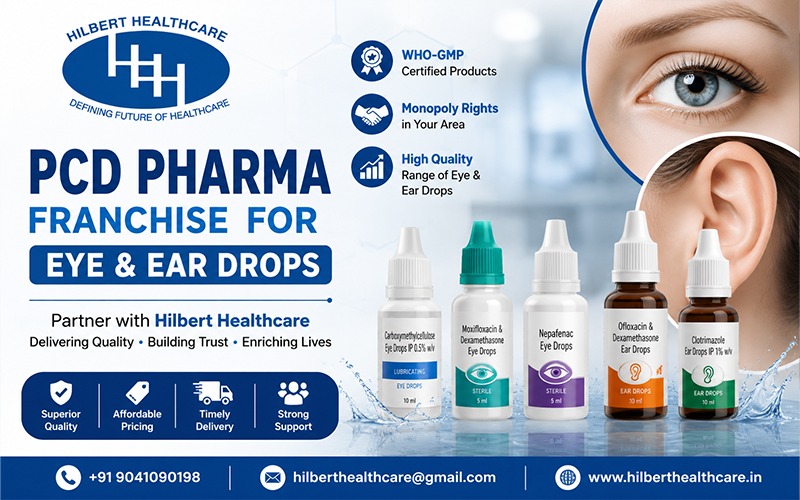
The pharmaceutical industry in India has witnessed remarkable growth over the past decade, creating numerous business opportunities for entrepreneurs and healthcare professionals. Among the most promising segments is the PCD pharma franchise for eye and ear drops, which has gained significant attention due to the rising prevalence of eye and ear disorders across the country.
Increasing screen time, environmental pollution, allergies, infections, aging populations, and changing lifestyles have contributed to a growing demand for ophthalmic and otic healthcare products. As a result, investing in a PCD pharma franchise for eye and ear drops has become an attractive business option for distributors, wholesalers, and aspiring pharma entrepreneurs.
With low investment requirements, monopoly rights, strong market demand, and excellent profit margins, this segment offers long-term growth potential. This blog explores the benefits, market opportunities, product range, and future prospects of starting a PCD pharma franchise for eye and ear drops in India.
PCD stands for Propaganda Cum Distribution. Under this business model, a pharmaceutical company grants marketing and distribution rights to franchise partners for specific territories.
A PCD pharma franchise in India enables individuals or businesses to sell and promote pharmaceutical products under an established brand name while receiving extensive support from the parent company.
Monopoly-based distribution rights
Access to quality pharmaceutical products
Marketing and promotional support
Low operational investment
High-profit potential
Exclusive territory coverage
Easy business expansion opportunities
The franchise model has become one of the fastest-growing business opportunities in India's pharmaceutical sector.
The market for eye and ear care products is expanding rapidly due to changing healthcare needs and lifestyle factors.
India is experiencing a significant increase in eye-related conditions such as:
Dry eye syndrome
Eye allergies
Conjunctivitis
Glaucoma
Cataracts
Eye infections
Computer vision syndrome
Long hours spent on computers, smartphones, and digital devices have increased the demand for lubricating and medicated eye drops.
Ear health issues are also becoming more common due to:
Bacterial infections
Fungal infections
Excessive earwax buildup
Hearing complications
Allergic reactions
Environmental pollution
These factors have created a strong and consistent demand for ear drops and related treatments.
The ophthalmic and otic pharmaceutical segment is one of the fastest-growing categories within the healthcare industry.
According to recent industry reports, India's eye care market continues to grow due to:
Increasing healthcare awareness
Growing aging population
Government healthcare initiatives
Better diagnostic facilities
Expansion of healthcare infrastructure
Increased access to specialty medicines
Similarly, the ear care market is witnessing steady growth because of improved diagnosis and treatment accessibility in both urban and rural areas.
These trends make a PCD pharma franchise for eye and ear drops a highly profitable and future-ready business opportunity.
Eye and ear disorders affect people across all age groups. The recurring need for treatment ensures continuous product demand.
Compared to manufacturing operations, franchise businesses require significantly lower investment while offering attractive profit margins.
Many pharmaceutical companies offer exclusive monopoly rights that eliminate direct competition within assigned territories.
Franchise partners can leverage the reputation and credibility of established pharmaceutical companies.
Potential customers include:
Hospitals
Clinics
Eye specialists
ENT specialists
Medical stores
Healthcare institutions
A franchise business can easily expand into neighboring territories and additional product categories.
A comprehensive product portfolio plays a vital role in business success.
Used for treating bacterial eye infections.
Help relieve dryness and irritation.
Effective in managing allergic eye conditions.
Used for reducing inflammation and swelling.
Designed to lower intraocular pressure.
Provide long-lasting moisture for dry eyes.
Prescribed for specific inflammatory conditions.
Treat bacterial ear infections effectively.
Used for fungal ear infections.
Help soften and remove excessive earwax.
Reduce irritation and swelling.
Provide multiple therapeutic benefits in a single formulation.
Several factors make eye and ear care products highly profitable.
Patients often require multiple treatment cycles, resulting in recurring sales.
Unlike seasonal products, eye and ear care medicines maintain consistent demand throughout the year.
Ophthalmologists and ENT specialists frequently prescribe these products.
Patients are becoming more proactive about eye and ear health.
Urban lifestyles contribute to eye strain, allergies, and related conditions.
Selecting the right pharmaceutical company is critical for long-term success.
Choose a company that follows:
WHO-GMP standards
ISO certifications
Quality assurance protocols
A wider range of products allows better market penetration.
Research the company's:
Market presence
Customer reviews
Distribution network
Industry credibility
Look for companies offering:
Visual aids
Product literature
Promotional materials
Sample products
Digital marketing support
Exclusive territorial rights can significantly improve profitability.
Effective marketing is essential for business growth.
Building strong relationships with healthcare professionals increases prescription rates.
Regular visits to pharmacies improve product visibility.
Modern pharma businesses benefit from:
SEO optimization
Social media marketing
Online healthcare directories
Email campaigns
Educational campaigns help create demand among healthcare providers and patients.
Digital device usage continues to rise, increasing cases of eye fatigue and dryness.
Older adults are more susceptible to eye and ear disorders.
Healthcare services are expanding rapidly in Tier-2 and Tier-3 cities.
Consumers are seeking preventive care and early treatment options.
The number of eye care and ENT clinics is growing throughout India.
Recent industry trends indicate:
Continuous growth in ophthalmic pharmaceutical sales.
Rising prescription rates for eye lubricants and anti-allergy medications.
Increased demand for ear infection treatments.
Strong growth in preventive eye care products.
Expansion of organized pharmaceutical distribution channels.
These developments strengthen the future prospects of a PCD pharma franchise for eye and ear drops.
India is one of the world's largest pharmaceutical markets and offers immense opportunities for franchise businesses.
The government and private sector continue to invest heavily in healthcare facilities.
Franchise opportunities are accessible to first-time entrepreneurs.
India's pharmaceutical supply chain is continuously improving.
Eye and ear care products represent a growing specialty segment.
Healthcare products remain essential regardless of economic conditions.
These factors make a PCD pharma franchise in India an excellent business opportunity for aspiring entrepreneurs.
Analyze local demand and competition.
Choose a trusted company with a quality product portfolio.
Fulfill licensing and registration requirements.
Secure exclusive territory coverage whenever possible.
Develop relationships with:
Doctors
Hospitals
Pharmacies
Clinics
Promote products consistently to maximize sales.
Focus on quality products and strong customer relationships.
Build long-term partnerships with healthcare professionals.
Conduct educational and promotional activities regularly.
Maintain proper stock planning and supply chain coordination.
The future outlook for this segment remains extremely positive.
Key growth drivers include:
Increasing incidence of eye and ear disorders
Rising healthcare expenditure
Growing awareness regarding preventive healthcare
Expansion of specialty clinics
Technological advancements in pharmaceutical formulations
Better healthcare access in rural regions
These factors indicate sustained demand and long-term profitability for franchise partners.
The PCD pharma franchise for eye and ear drops represents a highly rewarding business opportunity in India's rapidly expanding healthcare sector. Growing demand for ophthalmic and otic products, increasing healthcare awareness, and rising cases of eye and ear disorders continue to create strong market potential.
Entrepreneurs looking to establish a successful PCD pharma franchise in India can benefit from low investment requirements, high-profit margins, monopoly rights, and a steadily expanding customer base. By partnering with a reputable pharmaceutical company and implementing effective marketing strategies, franchise partners can build a sustainable and profitable business in this growing therapeutic segment.
A PCD pharma franchise for eye and ear drops is a business model where a pharmaceutical company grants marketing and distribution rights for ophthalmic and otic products to franchise partners in a specific territory.
Yes, the segment is highly profitable due to increasing demand, recurring prescriptions, and growing awareness regarding eye and ear health.
Investment requirements vary depending on the company, product portfolio, and territory size. Generally, the franchise model requires relatively low investment compared to manufacturing.
Common products include antibiotic eye drops, lubricating eye drops, anti-allergic eye drops, ear infection drops, antifungal ear drops, and ear wax removal drops.
Most reputable companies provide promotional materials, visual aids, product samples, brochures, and marketing assistance.
Factors such as digital screen exposure, pollution, allergies, and aging populations are contributing to increased demand for eye care products.
Yes, the franchise model is suitable for both experienced pharma professionals and first-time entrepreneurs.
Monopoly rights grant exclusive marketing and distribution authority within a designated territory, reducing direct competition.
Evaluate product quality, certifications, market reputation, support services, product range, and monopoly rights before making a decision.
The future is highly promising due to rising healthcare awareness, expanding medical infrastructure, and increasing demand for specialty healthcare products.
 (1).jpg)